
Explore the World’s Most Mysterious Ancient Sites
If you’ve ever wanted to feel like Indiana Jones—or just crave the thrill of uncovering something ancient and awe-inspiring—you’re in the right place. This guide is all about ancient travel destinations that blend real archaeology with folklore, taking you to the edge of myth and history.
These aren’t just piles of old stones. They’re forgotten cities, sacred ruins, and underground worlds that hold secrets we’re still trying to piece together. Some, like the Maya pyramids, are well known. Others are tucked away in places you’ve probably never heard of—but can absolutely still visit.
Whether you’re planning your next trip or just love daydreaming about the ancient world, these sites will make you feel like you’ve stepped straight into the story—mystery, wonder, and all.
Some of the links on this blog are affiliate links. If you click on one of these links and make a purchase, I may earn a small commission. Please read my disclosure policy if you’d like to know more. Your support helps me continue to provide travel inspiration.
Another great way to support my blog is by liking and subscribing. And I love it when you leave a comment and connect with me on Instagram and Pinterest!
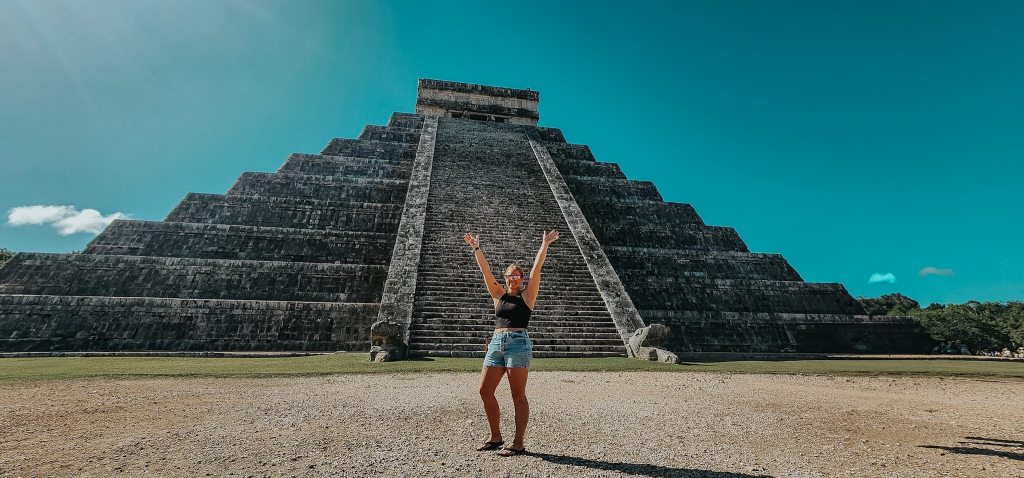
1. The Maya Civilization: A Window into the Past
Visiting Maya ruins feels like stepping onto the set of Indiana Jones—minus the booby traps (probably). Dense jungles, towering stone pyramids, and ancient cities slowly reclaimed by nature—it’s the kind of place where history doesn’t feel distant. It feels alive.
Where to Go
Two of the most awe-inspiring Maya sites are Tikal in Guatemala and Chichén Itzá in Mexico’s Yucatán Peninsula.
At Tikal, howler monkeys echo through the trees as you climb temple steps that rise above the jungle canopy. At Chichén Itzá, the iconic El Castillo pyramid is so precisely aligned with the sun that during the spring and fall equinox, shadows form a serpent slithering down the stairs. It’s wild.
These places aren’t just ancient—they’re full-on time portals.
Want a Preview Before You Go?
If you’re stateside and want a taste before committing to a flight, check out the Maya: Hidden Worlds Revealed exhibit at the Natural History Museum of Utah. It’s one of the most immersive Maya experiences in the U.S., with hands-on displays of pottery, tools, and jewelry. You’ll even see how their cities were planned and how their calendar system worked—no archaeology degree required.
What You’ll Feel
Expect to feel tiny. These structures are massive, and standing among them is humbling in the best way. There’s something about being surrounded by the ruins of an ancient world that makes you slow down. You start to wonder how they did all this without modern tools—and what we’ve lost in the rush of modern life.
Whether you’re wandering through moss-covered ruins in Guatemala or getting your first taste of Maya culture in a museum back home, this journey isn’t just about ticking off a destination—it’s about stepping into a story that’s been unfolding for thousands of years.
Other great travel tips for Guatemala and Mexico:
The Magic of Guatemala: Easy guide for Travellers
Traveling to Tulum? Get The Complete Packing List
2. NAN MADOL: THE REAL-LIFE ATLANTIS OF THE PACIFIC
If Atlantis ever existed, it might’ve looked a lot like Nan Madol. Located off the coast of Pohnpei in Micronesia, this ancient city rises out of the ocean—massive stone ruins built across nearly 100 manmade islets. It’s often called the “Venice of the Pacific,” but honestly, it feels more like something out of Indiana Jones.
A City Built on Coral
The ruins are built from basalt stones, some weighing up to 50 tons, stacked like giant logs to form temples, tombs, and walls. The most mind-blowing part? No one really knows how they got there. The site was likely the ceremonial center of the Saudeleur Dynasty, which ruled Pohnpei before the 1600s, but much of its history is still wrapped in mystery.
Why It Feels Like a Lost World
Walking (or paddling) through Nan Madol is eerie in the best way. The canals wind between stone structures now partly overtaken by jungle and tide. It’s quiet, untouched, and powerful. You feel like you’ve stumbled onto something forgotten—like the ocean’s been keeping a secret, and you just cracked it open.
Planning Your Visit
Nan Madol isn’t a quick detour—it takes some dedication to reach. You’ll fly into Pohnpei International Airport, then travel by car and boat to reach the site. But for travelers craving something off the beaten path, this is one of the most rewarding spots in the Pacific.
This is the kind of place that sticks with you—not just because it’s rare, but because it leaves you wondering what else is out there, waiting to be found.

3. DERINKUYU: THE UNDERGROUND CITY OF CAPPADOCIA
If the idea of hidden worlds fascinates you, there’s no better place to explore that than Derinkuyu—a multi-level underground city buried beneath the soft volcanic rock of Cappadocia, Turkey. Walking through its narrow tunnels and ancient chambers feels like entering another dimension, one that existed quietly beneath the surface for centuries.
A City Beneath the Earth
Derinkuyu could house over 20,000 people, complete with living quarters, churches, schools, storage rooms—even a winery. Some tunnels reach more than 200 feet deep. Historians believe the city was originally carved out by the Phrygians around the 8th century BC, and later expanded by early Christians as a refuge from invaders.
Stepping Into the Unknown
Wandering through Derinkuyu’s twisting tunnels and hidden passageways is equal parts thrilling and surreal. There’s no sunlight, and the air feels still—like the city itself is holding its breath. It’s easy to imagine why this place fuels so many theories, from ancient engineering marvels to possible connections with long-lost civilizations.
It might not be a “parallel world,” but it’s definitely a hidden one—and the feeling of descending into Derinkuyu is something you won’t forget.
Planning Your Visit
You’ll find Derinkuyu about 30 minutes south of Göreme, the main traveler hub in Cappadocia. It’s one of several underground cities in the region, but easily the most famous—and most developed for visitors. Bring comfy shoes and a jacket; the deeper you go, the cooler and more narrow it gets.
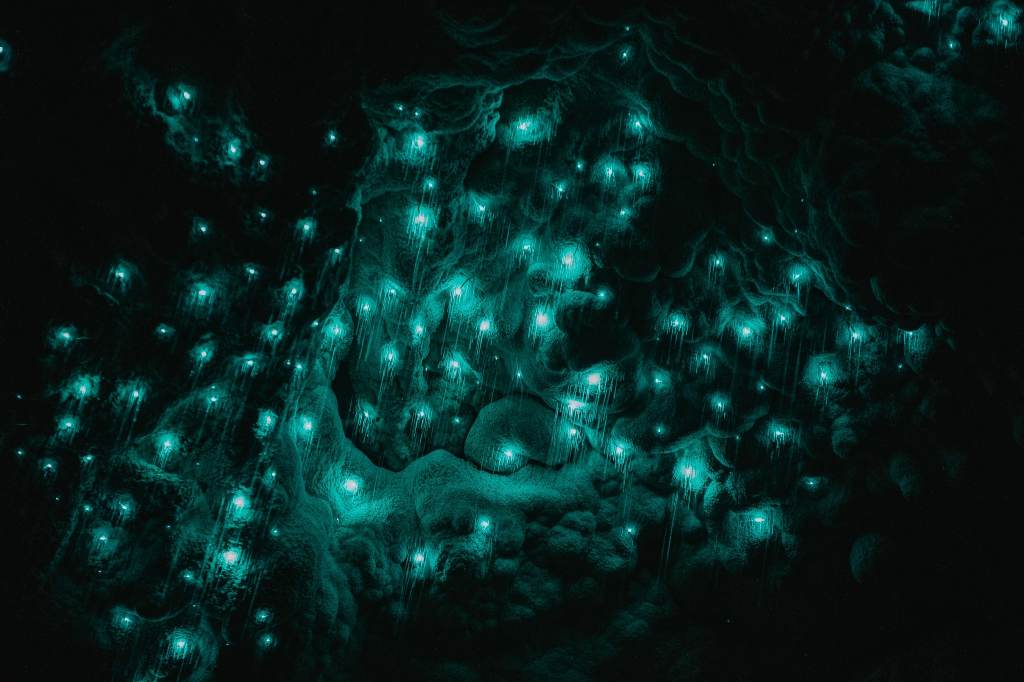
4. WAITOMO CAVES: A cave with a surprise
The idea of hidden worlds beneath our feet isn’t just science fiction—it’s something you can actually experience. While theories like Hollow Earth might belong to legends and fringe science, places like the Waitomo Glowworm Caves in New Zealand remind us that the world beneath the surface can be just as fascinating—and very real.
A Natural Underground Wonder
Tucked into the lush hills of New Zealand’s North Island, the Waitomo Caves are a network of limestone caverns that have been forming for over 30 million years. The real magic? Thousands of glowworms—tiny bioluminescent creatures that light up the ceilings like a star-filled sky. Glide through the dark water by boat, and you’ll feel like you’ve slipped into another dimension.
Why It Feels Like a Hidden World
There’s no WiFi, no daylight, and no sound but the occasional drip of water. Just a slow journey through the dark as constellations of glowworms hover above you. It’s the kind of place that blurs the line between science and magic—and while it’s fully natural, it feels like the entrance to something ancient and unknown.
Planning Your Visit
You can book a tour through Waitomo.com, with options ranging from gentle boat rides to adrenaline-packed blackwater rafting. Tours typically leave from the Waitomo Village, which is an easy drive from Auckland or Rotorua.
Whether or not you believe in vast underground civilizations, Waitomo proves one thing: you don’t have to go far to find a hidden world—you just have to go down.
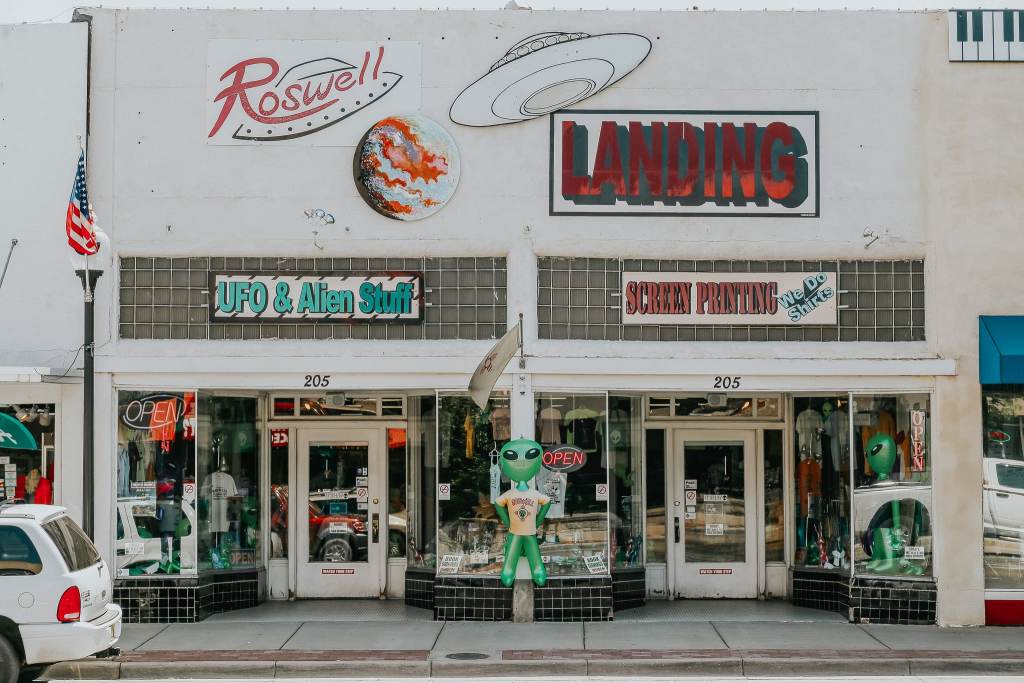
5. ROSWELL, NEW MEXICO: WHERE THE UFO LEGENDS LIVE ON
If stories of otherworldly beings spark your curiosity, Roswell should be on your radar—yes, that Roswell. The small desert town in southeastern New Mexico became a household name after the infamous 1947 incident, where an unidentified object reportedly crashed just outside the city. Some say it was a weather balloon. Others are still convinced it was something not from this planet.
Whatever you believe, Roswell has leaned into its legacy—and turned it into a destination for curious travelers looking to explore the fine line between science, speculation, and a whole lot of mystery.
What to Expect
At the heart of it all is the International UFO Museum and Research Center. It’s filled with witness accounts, government documents, historical displays, and plenty of alien paraphernalia. Whether you’re a skeptic or believer, it’s easy to get pulled into the “what if?”
Around town, you’ll find murals, cafés, and gift shops all embracing the alien aesthetic. The Roswell UFO Festival—held every summer—brings together researchers, sci-fi fans, and costumed visitors for a weekend of talks, parties, and the occasional tinfoil hat.
Why It Feels Otherworldly
There’s something surreal about driving into Roswell and seeing street lamps shaped like alien heads and fast food signs styled in galactic font. It’s quirky, yes—but it also speaks to something deeper: our shared fascination with what we don’t fully understand.
You’ll hear stories—from alleged sightings to modern-day theories—that sound like they could’ve come from ancient myths. And in a way, they did. The legends of fairies, goblins, and shadowy figures from folklore may not be so different from today’s alien encounters—they’re just dressed for a new era.
Make It a Stop on a Bigger Adventure
Roswell is a great detour on a Southwest road trip. From here, you can loop toward White Sands National Park, Carlsbad Caverns, or even Area 51-themed stops if you’re heading into Nevada.
Whether you’re chasing answers or just enjoying the weird and wonderful, Roswell invites you to ask questions—and maybe leave with more than you expected.
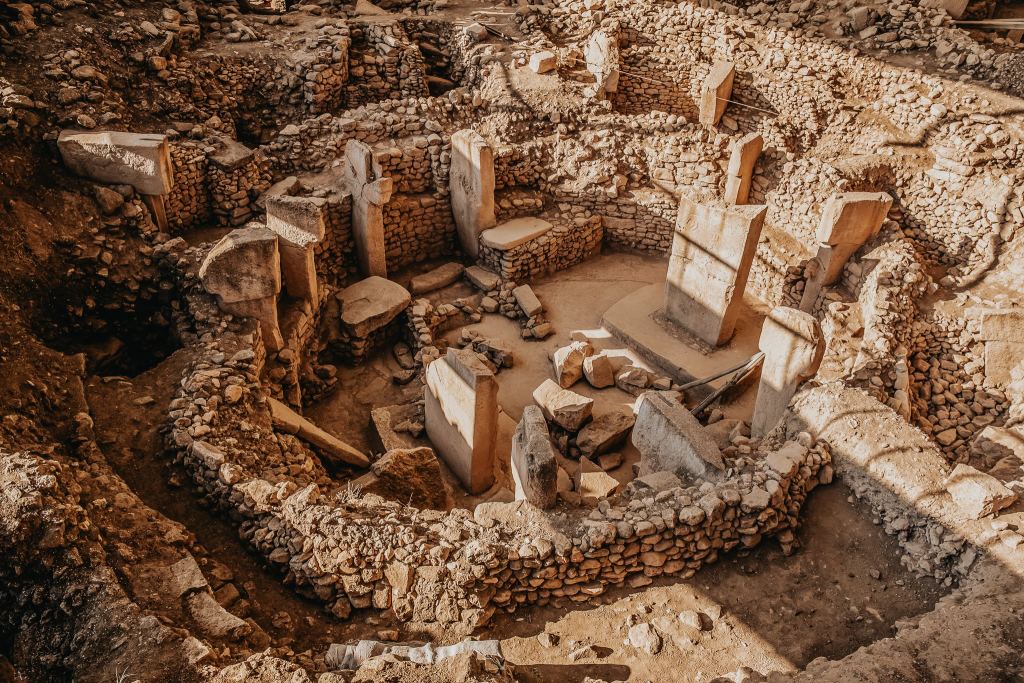
6. GÖBEKLI TEPE: WHERE MYTH MEETS HISTORY
Some places make you question everything you thought you knew about human history. Göbekli Tepe—a remote site in southeastern Turkey—does exactly that. Older than Stonehenge. Older than the pyramids. And no one’s entirely sure why it was built.
This is where archaeology and folklore blur, inviting you to step into a mystery that’s still unfolding.
A Site That Rewrites History
Discovered in the 1990s, Göbekli Tepe dates back over 11,000 years—that’s the Stone Age. But the structures here are anything but primitive. Massive stone pillars arranged in circles, carved with animals, symbols, and possibly even early forms of storytelling.
Researchers believe it was a spiritual site, possibly the world’s first temple complex. But who built it? And how? There are more questions than answers—which is exactly why it feels so magnetic.
The Stories That Surround It
Göbekli Tepe has become a magnet for myths, theories, and folklore. Some call it the original Garden of Eden. Others tie it to ancient star maps, or even visitors from beyond Earth. While mainstream science doesn’t lean into the fringe, the mystery is part of the appeal. It’s a place where imagination and evidence meet—and neither one can explain it fully.
How to Visit
You can visit Göbekli Tepe as a day trip from Şanlıurfa, a city in southeastern Turkey that’s steeped in spiritual history. The site is about 30 minutes outside the city and easily reachable by car, taxi, or a guided tour. Raised walkways let you view the circular enclosures from above, with plaques explaining key symbols and excavation zones.
Make time for the Şanlıurfa Archaeology Museum—home to a full replica of Göbekli Tepe’s layout, plus artifacts, exhibits, and some of the oldest statues ever discovered.
The region is safe for travelers, though it’s still off the radar for most tourists—making it ideal if you love those “I can’t believe I’m the only one here” kinds of moments. Plan ahead, dress modestly, and bring water—it gets hot, especially in summer.
FAQs (Frequently Asked Questions)
What are hidden realms and lost civilizations?
Hidden realms refer to unexplored or mythical places that are often steeped in mystery, while lost civilizations are ancient cultures that have vanished or are largely forgotten by modern society. Exploring these ancient cultures is crucial for understanding human history and the development of societies.
What is the significance of the Maya civilization in exploration?
The Maya civilization is notable for its monumental architecture and rich cultural practices. Its historical context provides valuable insights into social structures, spiritual beliefs, and advanced knowledge in areas such as astronomy and mathematics, making it a fascinating subject for exploration.
What theories exist about mythical civilizations like Atlantis and Mu?
Atlantis is renowned for its legendary status as a highly advanced civilization that supposedly disappeared, while Mu is theorized to be another lost continent. Both myths have significantly influenced modern exploration narratives and storytelling, sparking interest in uncovering their truths.
What is the Hollow Earth theory and its relevance to hidden realms?
The Hollow Earth theory posits that there may be underground civilizations within our planet. It has historical roots with notable proponents who believed in its existence, leading to intriguing exploration possibilities that challenge conventional views of Earth’s structure.
How do encounters with otherworldly beings relate to hidden realms?
Reported encounters with extraterrestrial beings, such as Martians, alongside legends of mythical creatures like fairies and goblins, enrich our understanding of hidden realms. These accounts shape folklore and influence modern belief systems regarding life beyond Earth.
What contemporary exploration opportunities exist for visiting lost civilizations?
Modern explorers can visit ancient sites like Tikal and Chichen Itza to experience the remnants of lost civilizations firsthand. Responsible tourism is essential in preserving these historical sites while allowing travelers to connect with the past.
wrap up
From jungle-covered ruins to cities carved beneath the earth, the world is full of places that feel like they’ve been pulled straight from myth and legend. Whether you’re chasing ancient echoes or just curious about the stories etched in stone, these hidden realms remind us that the past is never as far away as it seems. If you’re ready to turn your travel dreams into real-life adventures, go ahead—follow the mystery, pack your curiosity, and don’t forget your passport.
Have a favorite ancient site or one on your bucket list? Drop it in the comments or come chat with me on Instagram and Pinterest—I’d love to hear where your inner explorer is heading next!


