
The W Trek Patagonia: Guide on Prep and Getting There
Published June 4, 2023, Updated 10/27/2024
The W Trek Patagonia is one of the region’s most popular hikes, and for good reason! It’s an absolutely stunning hike that’s perfect for even first-time multi-day hikers.
I had a wonderful experience hiking the W Trek during my 3-month adventure around the world.
At the time, many countries were still closed or had restrictions due to the pandemic. I found myself booking excursions throughout Portugal when Argentina and Chile opened and knew I had to add this to the list!
I found a super affordable flight from Lisbon to Buenos Aires and started planning my trek.
There are so many options when you start looking into trekking Patagonia. But if I must choose, I would 100% recommend the W Trek in Torres Del Paine National Park.
In this prep guide, I’ll cover everything you need to know about preparing for the W Trek in Patagonia, from understanding the trek itself to packing and getting to the hike.
Some of the links on this blog are affiliate links. If you click on one of these links and make a purchase, I may earn a small commission. Please read my disclosure policy if you’d like to know more. Your support helps me continue to provide travel inspiration.
Another great way to support my blog is by liking and subscribing. And I love it when you leave a comment and connect with me on Instagram and Pinterest!

Understanding the W Trek
Located in Chile’s majestic Torres del Paine National Park, this circuit is a wonderful way for outdoor lovers to dip their toes in multi-day treks.
It spans 46 miles and involves a total elevation gain of less than 9,000 feet, with most hikers completing it in 4-6 days.
While the hike is considered moderately difficult, this is mainly due to the length of the trail. Much of the way is level or gently sloping paths, though you should be prepared for rocky climbs and descents, as well as slipper conditions, depending on the time of year.
So, even beginner hikers will enjoy this one if they’re physically active and prep reasonably.
The trail forms a “W” shape, connecting 3 main valleys—Valle Ascencio, Valle del Francés, and Valle del Grey.
And at the end of each valley hike, you have some of the most beautiful and iconic landscapes in all of Patagonia, including granite spires, glaciers, and turquoise lakes!
A huge draw is the well-developed infrastructure within the Torres del Paine National Park. This is not a backcountry hike.
You’ll find well-defined trails, ranger stations, and a variety of accommodation options at dozens of points along the way. And you’re sure to meet other friendly hikers along the trail.
All of this makes the W Trek in Patagonia accessible compared to some of the more remote hikes in the region.
Planning an adventure across South America? Check out my complete itinerary for Patagonia!
Preparing for the W Trek in Patagonia
Fitness Requirements for the W
The W Trek is considered moderately difficult, due to some steep climbs and long hiking days.
So it’s important for a successful and positive experience that you prepare your body for this iconic hike! Though, if you’re considering this hike, you should already be physically active.
But this is your chance to set goals and focus on strength, flexibility, cardio, and endurance. Start training 8-12 weeks in advance.
- Strength Training – target your legs and core, which will bear the brunt of steep ascents and uneven trails. Incorporate exercises like lunges, squats, and planks.
- Flexibility and Mobility – Improving flexibility is also essential to prevent muscle tightness and injury. Regular stretching or yoga sessions can help increase the range of motion in your legs, hips, and back, with a focus on hamstrings, calves, and hip flexors.
- Cardio Training – Think about brisk walking, running, or cycling. These activities boost stamina and prepare you for hours of trekking each day.
- Hiking Sessions – Start hiking regularly to get your body accustomed to the demands of the W Trek. Start with shorter hikes and gradually increase the distance, working up to 6-8 hours of hiking in a single day. Aim for 2-3 hikes per week.
**Disclaimer: I’m not a certified trainer/coach. However, these are some of the activities I regularly implement into my daily life that I feel contribute to my success on the trail.
Packing List Essentials
When taking on a multi-day hike like the W Trek in Patagonia, it’s crucial to pack the right gear. Here’s a packing list and tips to help you prepare for this iconic multi-day hike.
Hiking Gear
- Backpack: Look for a 40–60-liter backpack with a rain cover to carry all your essentials.
- Tent: Lightweight and wind-resistant (if you’re camping).
- Sleeping Bag: A warm, compact sleeping bag rated for sub-zero temperatures.
- Sleeping Pad: A lightweight, insulated pad for warmth and comfort.
- Trekking Poles: Helpful for stability on steep or uneven terrain.
Food and Water
- Pre-packed Foods: Good options for meals include nutrient-dense options like instant oatmeal, cheese and crackers, soup packets, and freeze-dried meals.
- High-Energy Snacks: Snacks like nuts, dried fruit, nut butter packets, and energy bars are great for keeping your energy levels up.
- Cooking Gear: Portable stove, fuel, lightweight cookware, and utensils.
- Water Bottle or Hydration System: Refillable bottles or hydration bladders (you can refill at streams and at refugios).
Clothing and Footwear for Unpredictable Weather
- Base Layer: Go with moisture-wicking long-sleeve shirts and leggings.
- Insulating Layer: Popular options include fleece hoodies or puffy jackets and vests, as well as hiking pants and leggings.
- Outer Layer: A waterproof but breathable shell jacket and pants to protect against rain and strong winds.
- Footwear: Broken-in, waterproof hiking boots with good ankle support.
- Gaiters: To keep rocks and dirt out of your boots.
- Accessories: Wool socks, a hat for sun protection, a beanie for warmth, gloves, and a neck gaiter.
Personal Essentials
- Headlamp: For navigating around camp after dark.
- Personal hygiene items: Pack lightweight essentials such as biodegradable soap, toothbrush, toothpaste, and quick-dry towel.
- First Aid Kit: Include bandages, pain relief medication, blister treatments, and any personal medications.
- Sun Protection: Sunscreen, lip balm with SPF, and sunglasses.
- Emergency Items: Bring a map, compass, whistle, and emergency contact information. A lightweight emergency blanket is also a good precaution.
Alternate Option: Buying Gear and Food There
If you decide not to bring camping gear, a plethora of great companies will rent you the equipment you need for your trek. The company I went with was Rental Natales.
I recommend pre-booking during peak season because things can sell out. I went with trekking poles, a sleeping bag, a mat, a tent, and cooking equipment.
They also sell freeze-dried meals if you want to stock up. I bought breakfast and dinner meals with them and headed to the store for lunch food and snacks.
Food is also for sale at the refugios along the trek if you need to stock up more. But prepare to pay high prices (card is accepted, but always wise to bring some cash).
Planning Your W Trek Patagonia Itinerary
When planning your W Patagonia itinerary, there are a few factors to consider so you have the best experience. Overall, you’re looking at 4 to 6 days in the park.
Your first day will be spent traveling and you shouldn’t try to rush this. Most hikers start in Puerto Natales, which is a 2- to 3-hour bus ride from the park entrance at Torres del Paine.
So, take the first day to check in, rest, get supplies, meet your fellow hikers, and acclimate before starting the hike.
Next, decide on your preferred pace. Do you want to hike leisurely with plenty of photo breaks, or cover more ground quickly?
Longer itineraries allow for more exploration and shorter daily hikes, while a 4-day plan may appeal to those seeking a challenge.
Weather in Patagonia can also affect your plans, so build some flexibility into your itinerary for possible trail closures or changes. If you’re hiking during the shoulder season, definitely check for trail closures ahead of time.
Lastly, prioritize your must-sees. If catching the sunrise at Mirador Las Torres or spending extra time at Glacier Grey is important, adjust your route to allow for more time at those spots.
Guided vs. Self-Guided Treks
You can choose either a guided or self-guided hike on the W Trek in Patagonia.
This is mainly about personal preference, but experience on multi-day hikes should also be factored in to your decision.
Guided Treks are ideal for less experienced hikers or those who prefer to have logistics managed for them. Guided tours include a knowledgeable guide, pre-booked accommodation, and usually meals (always confirm!).
If you’re an experienced hiker who prefers flexibility, a self-guided trek allows you to go at your own pace and make your own decisions along the way.
In this case, however, It’s vital to book lodgings in advance, especially during peak season.
Looking for more South American destinations to check out? Read about the top underrated things to do in Bolivia!
What to Book
If you go on the W Trek alone, you’ll need to book everything yourself. If you go through a tour company, they’ll do all the work for you.
The first can feel a bit stressful, but the second is much more expensive. Here’s an overview of what you need to book:
Accommodations on the W Trek Patagonia
Lodgings inside Torres del Paine fill up 6 months in advance, so book as soon as you start planning your trip. Your options include:
- Campsites: These are the most budget-friendly and offer a true wilderness experience. Keep in mind, you’ll need to bring your own tent.
- Refugios: These mountain lodges provide dormitory-style bunk beds, meals, and showers. Staying in refugios allows you to hike with a lighter pack since you won’t need camping gear.
- Lodges: You’ll also find some luxury lodges with private rooms for more comfort and amenities. They are ideal for those seeking a more relaxed trekking experience.
Also keep in mind that campsites and refugios are only open during the high season (mid-September through mid-April).
Flights to Chile
To start your adventure on the W Trek in Patagonia, you’ll first need to get to either Puerto Natales or Punta Arenas.
Puerto Natales, known as the gateway to Torres del Paine National Park and is much close. However, the airport here is much smaller and it’s harder to find flights.
So, many travelers choose to fly into Punta Arenas instead and take a 3-hour bus ride to Puerto Natales. Either way, you’ll have a layover in Santiago before catching a domestic flight to either city.
I suggest using a third-party site like Omio to streamline this whole process and compare rates for the cheapest price.
Transportation in Puerto Natales
Once you land in Chile, remember, cash is best! But remember, you can’t exchange money at the airport, so bring cash with you.
You’ll need it pay for the shuttle services and taxis from luggage claim. Both take USD (shuttles are cheaper than taxis).
The town itself is small and walkable, with lots of shops geared towards hikers coming in from all over the world.
Busses to Torres del Paine
There’s also the transportation into the park to book. You can do this online or at the bus station in town. Trust me, book this early too.
I didn’t book my bus ride into the park until the day before and had to take a later bus, which ate up a lot of my day.
For the 2024- 2025 season, bus tickets are per person currently $35.000 CLP, each way. (Price given in good faith but may change from the time of publication).
Permits and Park Fees
You can buy your park entrance ticket online up to the day before you trek. I recommend not waiting until you’re at the park, since you won’t have any cell service or Wi-Fi here.
If you wait till you’re at the park, you’ll have to get off the bus and buy your ticket at the ranger station.
And if you are going left to right on the W Trek, you’ll need cash for the ferry at Pudeto.
How to Get to the W Trek in Patagonia
You’re almost ready! Now it’s time to think about how you’ll get to the W Trek.
Bus from Puerto Natales to Torres del Paine
Once you’re in Puerto Natales, the buses depart every 60- to 90-minutes for Torres del Paine National Park. The bus ride takes about 2-3 hours and drops you off at the main park entrance, Laguna Amarga.
If you’re starting from east to west (which the most common route), you’ll head to Laguna Amarga. From here, there’s a shuttle to the Torres Base trailhead.
I went west to east. The bus will take you to Pudeto, where a ferry crosses Lago Pehoé to reach the Paine Grande trailhead.
The buses will stop at the main entrance and start scanning everyone’s entrance tickets. Some will start their journey here, but if you plan to hike from the W from left to right like I did, you’ll need to get back on the bus to Pudeto.
(Just make sure when you book your bus ride that you book the correct gate as your destination! I accidentally booked Laguna Amarga as my destination, but thankfully, the driver let me stay on the bus to Pudeto.)
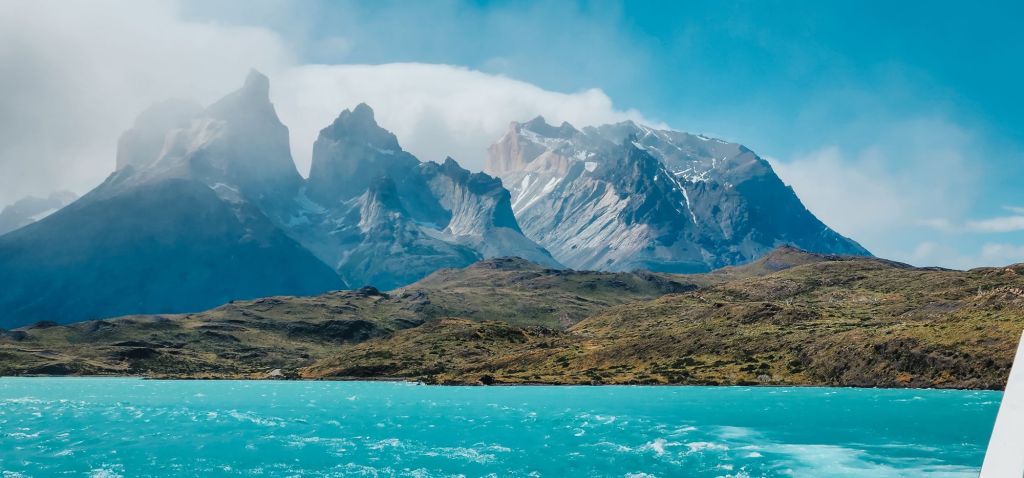
After boarding the ferry at Pudeto, enjoy the fantastic views before you get ready for a long, incredible 5-day adventure!
FAQ on the W Trek in Patagonia
How difficult is the W hike in Patagonia?
The W Trek is of moderate difficulty, suitable for fit beginners and experienced hikers. It features some challenging sections with steep ascents and rocky paths, but the trails are well-marked and manageable with proper preparation.
Where do you sleep on the W Trek in Patagonia?
You can choose from campsites and refugios (mountain lodges) located along the trail. Either camp in your own tent, rent camping gear, or stay in shared dormitory-style rooms within the refugios.
Is the W Trek crowded?
The W Trek can be crowded, especially during the high season (December to February), since it’s one of the most popular Patagonia treks. To avoid larger crowds, consider hiking during the shoulder seasons (October-November or March-April).

Wrap Up on the W Trek in Patagonia
If you’re heading to Torres Del Paine for the W Trek in Patagonia, you’re going to experience some of the most stunning landscapes you’ve ever seen.
This hike was something I’ll always remember. I promise you that preparing properly will free your mind up to truly enjoy the entire experience.
Book your W Trek adventure today and start preparing! And remember to check back for my future post detailing the W Trek itself.



5 Comments