Discover Moonscape Overlook: A Hidden Gem in Utah
Tucked away in the high desert near the tiny town of Hanksville, Utah, lies one of the most surreal and otherworldly viewpoints in the American Southwest—Moonscape Overlook. With its cracked lunar surface, jagged plateaus, and deep canyon shadows, this off-the-beaten-path overlook feels like you’ve landed on another planet. And yet, it’s completely free to visit—no permits, no crowds, just you and the horizon.
Perfect for solo travelers, photographers, and road trippers looking to escape the well-trodden paths of Utah’s national parks, Moonscape Overlook offers epic sunrise views, wide-open skies, and the chance to camp under a blanket of stars. In this guide, I’ll share everything you need to know about how to find it, what to expect when you arrive, and why this hidden gem deserves a spot on your next desert adventure.
Some of the links on this blog are affiliate links. If you click on one of these links and make a purchase, I may earn a small commission. Please read my disclosure policy if you’d like to know more. Your support helps me continue to provide travel inspiration.
Another great way to support my blog is by liking and subscribing. And I love it when you leave a comment and connect with me on Instagram and Pinterest!
1. Where Is Moonscape Overlook?
Moonscape Overlook is located in south-central Utah, just north of the small desert outpost of Hanksville—a town that many road trippers pass through on their way to Capitol Reef or Lake Powell without realizing the alien beauty just minutes away.
The overlook sits along the edge of a dramatic canyon mesa in a remote area known as the San Rafael Swell. It’s not part of a national or state park, which means it’s free to access and often nearly empty—even during peak travel season.
To give you an idea of its proximity:
- About 4.5 hours from Salt Lake City
- About 2.5 hours from Moab
- Roughly 90 minutes east of Capitol Reef National Park
- Just 20 minutes from downtown Hanksville
You won’t find big signs or parking lots pointing the way—but that’s part of the appeal. It’s a true hidden gem for those willing to veer off the main highway and explore Utah’s
2. How to Get to Moonscape Overlook
Getting to Moonscape Overlook feels like an adventure in itself—and that’s exactly why it remains such a well-kept secret.
From Hanksville:
1. Head west on UT-24 for about 5 miles.
2. Turn right (north) onto Factory Butte Road—a wide, well-graded dirt road.
3. Continue for approximately 6 miles, then turn right onto Skyline View Road.
4. Drive another 1.5 miles to reach the overlook area.
You’ll know you’re close when the road narrows and the land drops dramatically to reveal deep canyons and sculpted badlands. There are no signs, but the views become unmistakable.
Road Conditions:
In dry weather, most vehicles with decent clearance (including 2WD crossovers) can make it without issue.
After rain or snow, the road becomes slick and muddy—4WD is strongly recommended.
There is no cell service, so make sure to download offline directions and save the GPS coordinates beforehand.
Pro tip for solo travelers: Leave your travel details with a friend before heading out. This area is remote, and you’ll likely be out of signal range until you return to Hanksville.
raw, untouched backcountry.
(GPS coordinates: 38°27’05.8″N / 110°50’16.6″W – Be sure to download offline maps before heading out!)

3. Best Time to Visit Moonscape Overlook
The beauty of Moonscape Overlook lies in its ever-changing light and shadows, so timing your visit right can make all the difference—especially if you’re a photographer or just love a good sunrise moment.
Best Time of Day:
Sunrise: The soft, golden light illuminates the alien terrain and creates incredible contrast in the badlands below.
Sunset: Also stunning, especially if there are clouds to reflect the fiery desert sky. Be cautious if you’re leaving after dark, as the dirt roads are unlit and can be disorienting.
Best Time of Year:
Spring (April–May) and Fall (September–October) are ideal. Expect comfortable daytime temperatures, crisp mornings, and clear skies.
Summer (June–August): Daytime temps can soar past 100°F, and the risk of flash floods and soft, impassable roads increases during monsoon season (late July–August).
Winter (December–February): Cold and potentially snowy, but still accessible in dry conditions with proper gear and vehicle. Expect freezing temps at night.
Pro Tip: Always check the weather before you go. Even a little rain can turn the access roads into mud traps, especially near Factory Butte.
4. What to Expect When You Arrive
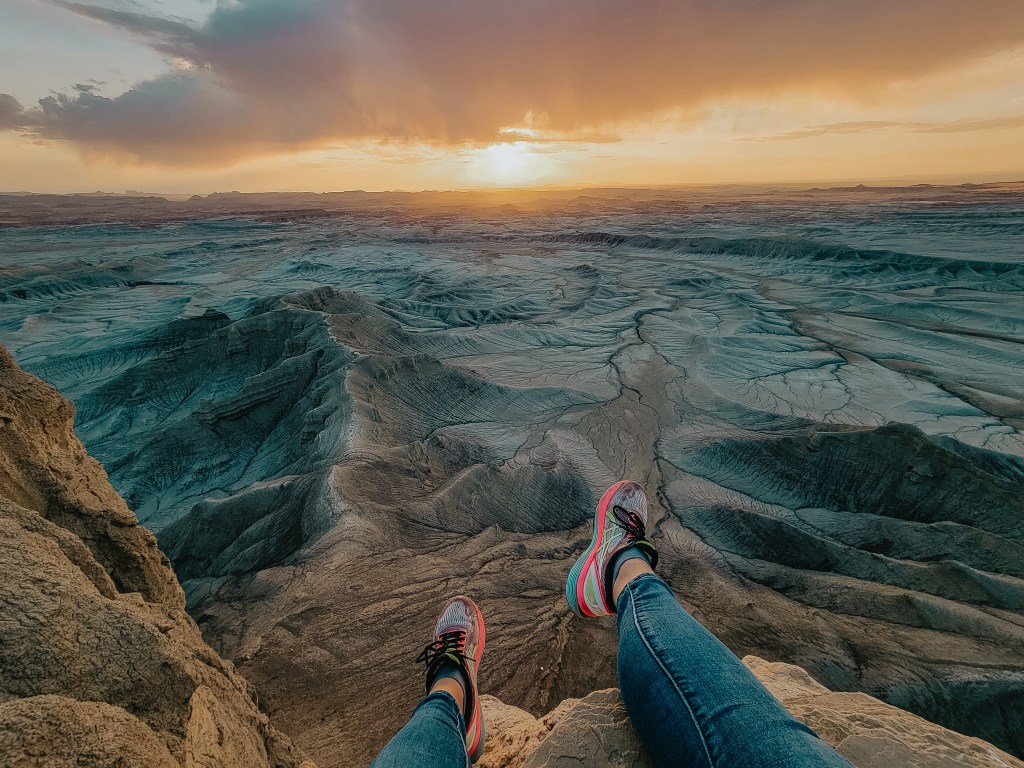
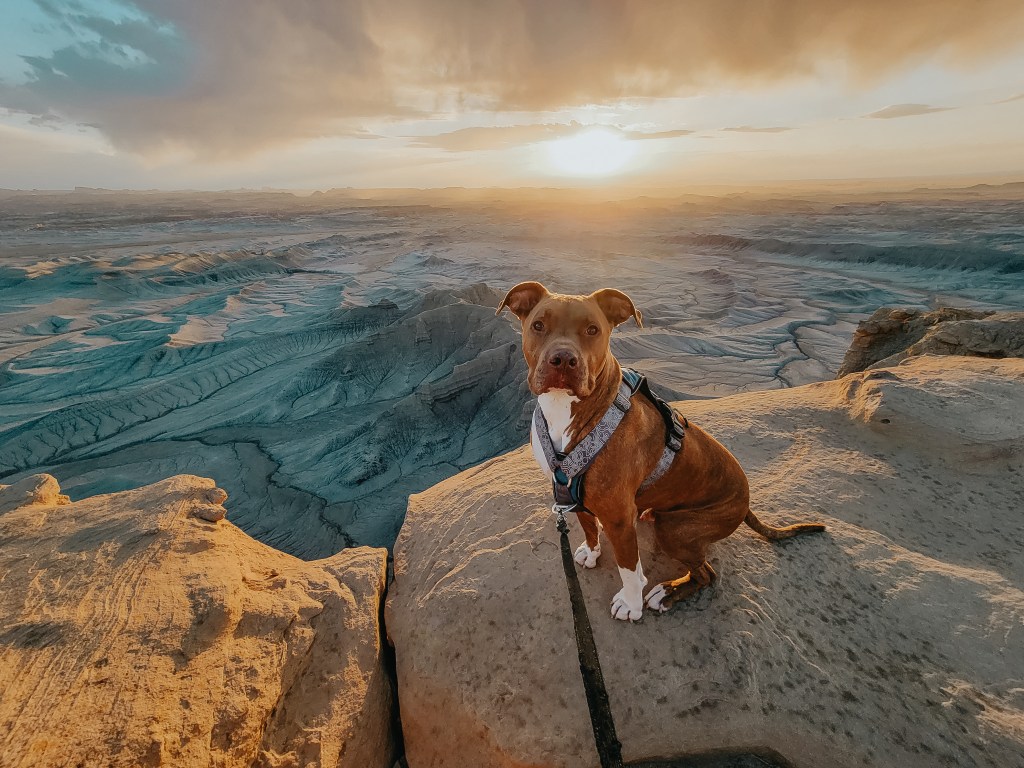
When you finally reach Moonscape Overlook, the landscape opens up into a jaw-dropping view that feels straight out of a sci-fi film. The overlook sits atop a steep cliff edge, giving you panoramic views of deep gray-and-blue badlands, ridges, and canyons that stretch all the way to the Henry Mountains.
Here’s what to expect:
No Facilities: There are no bathrooms, no water sources, no signs, and no cell service. It’s completely undeveloped—so plan accordingly.
Natural Beauty, Unfiltered: The terrain looks like cracked clay or lava flow from above, and the elevation provides a dramatic drop into the valley below. It’s completely silent, remote, and awe-inspiring.
Short Walk, Big Views: From the parking area (really just a flat spot to pull over), it’s a short walk to the actual edge. Some visitors wander a bit for better photo angles, but there’s no formal trail.
No Guardrails: You’ll be standing right at the edge of a high cliff—so watch your footing and be especially cautious during windy conditions or if visiting solo.
Low Crowds: There’s a good chance you’ll have the entire place to yourself, especially on weekdays.
Pro tip: Arrive 30–45 minutes before sunrise or sunset to watch the colors shift over the cracked desert below—and bring a thermos of coffee or tea to soak it all in.
5. Can You Camp at Moonscape Overlook?
Yes—you can absolutely camp at Moonscape Overlook, and it’s one of the most magical places in Utah for a free, off-grid overnight stay. The area falls on BLM (Bureau of Land Management) land, which means dispersed camping is allowed with no permit required.
What to Know About Camping Here:
No Services: There are no fire rings, picnic tables, or vault toilets. Bring everything you need: water, food, a camp toilet or wag bag, and extra layers—it gets cold at night, even in summer.
Pack In, Pack Out: Follow Leave No Trace principles. Pack out all trash, food scraps, and toilet paper. Keep this pristine landscape wild and clean.
Space for Vehicles: There’s room for a few vehicles near the overlook, but please avoid driving or camping too close to the cliff edge—erosion is real, and the ground can be fragile.
Stargazing: With zero light pollution and wide-open skies, this is one of the best places in Utah for stargazing and astrophotography. The Milky Way on a moonless night is absolutely unreal.
Safety Tips for Solo Travelers: Share your GPS location with a trusted friend before heading out. Bring a satellite communicator if you have one. And trust your gut—if it feels too isolated, head back to town and return with a buddy next time.
Pro tip: Set up camp before sunset so you can safely navigate the terrain and soak up the last light of day with dinner and a view.

6. What to Pack for Moonscape Overlook
Because Moonscape Overlook is remote and completely undeveloped, being well-prepared is essential—especially if you’re going solo or camping overnight.
Essentials to Bring:
- Water: At least 1–2 gallons per person per day. There are no water sources nearby.
- Food & Snacks: Bring all your meals—there are no restaurants or stores once you leave Hanksville.
- Layers: Desert temps swing drastically. You’ll want sun protection during the day and insulated layers for chilly nights.
- Navigation: Offline maps (like Gaia GPS or Google Maps downloaded), GPS coordinates, and a printed map as a backup.
- First Aid Kit: Include bandages, electrolyte tabs, and anything you might need if stuck for hours.
- Power Bank or Solar Charger: For phones, cameras, or GPS units.
- Flashlight or Headlamp: Especially important if you’re camping or staying through sunset.
- Optional (But Helpful):
- Tripod and Camera Gear
- Portable camp toilet or wag bag
- Small camp chair or blanket for sitting at the edge with a view
- Trash bags—always pack out everything
Don’t worry, I have my locker full of all the items you need here!
Pro tip for solo female travelers: Add a personal safety alarm or small pepper spray to your gear list for peace of mind, and consider sharing your real-time location with a trusted friend via GPS tracking or app.
7. Nearby Attractions to Pair With Moonscape Overlook
One of the best things about visiting Moonscape Overlook is how easily it fits into a larger southern Utah road trip full of hidden gems and jaw-dropping landscapes. If you’re already out near Hanksville, there are several must-see spots within a short drive.
Factory Butte
Just minutes away from the Moonscape turnoff. Towering monolith with dramatic ridgelines—perfect for sunrise or sunset photography. Easily accessible by dirt road and great for off-roaders or drone pilots.
Goblin Valley State Park
About 1 hour northwest of Hanksville. Famous for its whimsical rock formations that look like little goblins—fun to explore and great for solo selfies or creative shots. $20 entrance fee, well-maintained park with facilities.
Capitol Reef National Park
Only 90 minutes west of Moonscape. Less crowded than the other Utah Mighty 5 parks, but packed with colorful cliffs, orchards, and scenic drives. Try the Cathedral Valley loop or the short hikes near Fruita for an easy add-on.
Leprechaun Canyon
Located along Highway 95, just south of Hanksville. A beautiful and relatively easy slot canyon (perfect for solo adventurers without technical gear). Free to access and often uncrowded.
Coral Pink Sand Dunes State Park (if you’re heading south)
Located near Kanab—several hours away, but great if you’re continuing your road trip toward Zion or Arizona. Offers a different kind of desert beauty with wind-swept dunes and ATV access.
Pro tip: If you’re building a longer itinerary, consider Moonscape Overlook as the centerpiece of a loop between Capitol Reef, Goblin Valley, and Monument Valley or Lake Powell.
8. Final Tips for Female Travelers
Moonscape Overlook is an incredible place to experience solitude and adventure—but it’s also extremely remote. If you’re a solo female traveler, here are a few extra considerations to help you feel confident and safe during your visit:
Trust Your Instincts
If the area feels too empty or weather conditions shift, don’t hesitate to turn around or choose a safer camping spot. Listen to your gut—it’s your best travel companion.
Safety Gear Essentials
Bring a personal safety alarm or pepper spray (especially if camping alone). Consider carrying a satellite communicator (like a Garmin InReach or Zoleo) in case of emergencies—there’s no cell reception.
Share Your Itinerary
Let someone back home know your expected arrival and return times. If you’re camping, send them a pin of your location once you’re set up (if possible).
Camp Visibility
If you’re nervous about isolation, consider parking in a visible, open area near the overlook instead of a more hidden spot. Bright tent colors or vehicle reflectors can be helpful for visibility.
Local Support
Fuel up and grab snacks or coffee in Hanksville before heading out. The Hollow Mountain gas station is quirky and fun—built into a sandstone cliff—and it’s the last real stop for supplies.
Frequently Asked Questions
Q: Do I need a permit to visit Moonscape Overlook?
Nope! The overlook is located on BLM land, which is public and free to access—no permit required for visiting or camping.
Q: Can I visit Moonscape Overlook with a 2WD vehicle?
In dry weather, yes—especially if your vehicle has decent ground clearance. After rain or snow, the roads can become muddy and treacherous, so 4WD is recommended. Plus, there is sand, so if you don’t feel your vic can do it, don’t risk it.
Q: Is Moonscape Overlook part of a national park?
No, it’s not within any park boundaries. That’s part of the appeal—it’s wild, untamed, and rarely crowded.
Q: Is it safe to camp overnight?
Yes, if you’re prepared. Solo travelers should take extra precautions (share your location, bring safety gear), but dispersed camping is legal and common here.
Q: Is there cell phone service?
Very little, if any. Expect to be completely off-grid once you leave Hanksville, so download offline maps and let someone know your plans.
Q: When is the best time to photograph the overlook?
Golden hours—sunrise and sunset—offer the most dramatic light and shadows. If you’re into astrophotography, aim for a clear, moonless night.
Wrap Up
If you’re craving a detour from Utah’s crowded national parks—or just want to feel like you’ve stepped onto another planet—Moonscape Overlook delivers. With its lunar-like terrain, untouched silence, and open skies, it’s the kind of place that stays with you long after you’ve left.
Whether you’re road-tripping solo, chasing the perfect photo, or pitching your tent under a sky full of stars, Moonscape is proof that the best places are often the ones no one’s talking about. So fill up your tank, pack your camera, and follow the dusty road out of Hanksville—you just might find a little magic at the edge of the world.