
2 Days in Lisbon: How to Craft the Perfect Itinerary

Lisbon – the vibrant capital of Portugal and a city that’s absolutely stolen my heart. With its picturesque narrow streets, breathtaking miradouros (that’s viewpoints, by the way), and a culture that just invites you in, it’s no wonder the city is topping many travelers’ must-visit lists.
If you’ve only got 48 hours to explore this gem, you might be thinking, “Can I really do it justice?” The answer is a resounding yes!
And I’m here to guide you through crafting the perfect two-day whirlwind tour of this European beauty.
Some of the links on this blog are affiliate links. If you click on one of these links and make a purchase, I may earn a small commission. Please read my disclosure policy if you’d like to know more. Your support helps me continue to provide travel inspiration.
Another great way to support my blog is by liking and subscribing. And I love it when you leave a comment and connect with me on Instagram and Pinterest!
Table of contents
- Getting There & Around: Navigating Lisbon Like a Pro
- 2-day itinerary in lisbon
- Tips and Recommendations for a Seamless Lisbon Experience
- Where to Stay in Lisbon: A Quick Guide
- Day Trips from Lisbon: A Whirlwind of Adventure Awaits
- Wrapping Up Your Lisbon Adventure
- Frequently Asked Questions (FAQs) About Lisbon
- Join the Lisbon Adventure!
Getting There & Around: Navigating Lisbon Like a Pro
Airport – Lisbon Portela Airport (Aeroporto da Portela):
Lisbon’s main international gateway is the Lisbon Portela Airport, conveniently situated just 7 kilometers north of the city center.
Upon landing, you’ve got several hassle-free options to reach the heart of the Portuguese capital.
The Metro’s Red Line is both affordable and efficient, whisking you to the city center in just about 20 minutes.
Alternatively, if you’ve packed a bit heavy or prefer door-to-door service, there are airport shuttles, taxis, and ride-sharing options aplenty waiting just outside the terminal.
Public Transportation – The City’s Lifeline:
Lisbon boasts a comprehensive public transportation network, encompassing metros, buses, trams, and trains. Here’s a quick lowdown:
- Metro: The most efficient way to traverse long distances in the city. It’s clean, punctual, and the stations, often adorned with art, tell stories of their own.
- Buses & Trams: These are not just modes of transport but an experience. Especially the vintage tram 28, which meanders through Lisbon’s narrow streets, giving you a historic tour of its own.
- Trains: If your itinerary includes day trips to places like Sintra or Cascais, the train is your best bet. Comfortable and timely, they offer a scenic view of the landscape transitioning from urban to coastal or pastoral.
- Lisboa Card: If you’re someone who’d rather not fumble for change or queue up for tickets every time, the Lisboa Card is a godsend. Offering unlimited rides on public transport and discounts at many top attractions, it’s both economical and convenient. Plus, for many main attractions, this card offers a skip-the-line ticket feature. That means less time waiting and more time exploring.
Taxis & Ride-Sharing – Personalized Commutes:
Taxis in Lisbon are relatively affordable compared to other European capitals. They run on meters, so you always know you’re paying a fair price. However, do ensure the meter is running to avoid any confusion at the end of your ride.
Ride-sharing has made its mark in Lisbon as well. Apps like Uber and Bolt are operational and provide an alternative to traditional taxis. They can be especially handy if you’re heading out early in the morning or returning late at night when public transport is sparse.
Insider Tip: While Lisbon’s taxis and ride-sharing options are great, remember that the city’s topography includes many narrow streets and alleys.
Sometimes, the best way to explore is on foot, embracing the city’s charming quirks and serendipitous discoveries.
Remember, the journey is as pivotal as the destination. And in a city as vibrant as Lisbon, getting around is not just a necessity but an integral part of the experience.
Cultural Mindfulness & Tips: Navigating Lisbon with Grace and Respect
Tipping Culture – Showing Appreciation:
Lisbon, like many European cities, has its own unwritten rules when it comes to tipping. In restaurants, it’s customary to leave a tip if you’ve enjoyed your meal and the service.
Typically, a tip of around 5-10% is appreciated, but there’s no hard and fast rule. If you’re at a cafe and just had a coffee or a pastel de nata, consider leaving some small change.
For taxis, rounding up to the nearest euro or leaving an extra euro or two is a kind gesture.
However, remember, while tipping is appreciated, it’s not as obligatory as it might be in other countries. Always go with what feels right for you.
Greetings & Manners – The Portuguese Way:
The Portuguese are warm and welcoming people. When greeting someone for the first time, a handshake accompanied by direct eye contact and a smile is standard.
As relationships develop, expect the greetings to become warmer, often involving close friends and family exchanging two kisses, one on each cheek.
When entering shops or restaurants, a simple “Olá” (Hello) or “Boa tarde” (Good afternoon) can go a long way.
It’s a small gesture that shows respect and appreciation for the local culture. And if you’re diving into that delicious food, don’t forget to say “Obrigado” (Thank you) for male speakers or “Obrigada” for female speakers.
Safety – Ensuring a Smooth Trip:
Lisbon is generally considered a safe city for tourists. However, as in any major city, it’s essential to be aware of your surroundings. Here are a few safety pointers:
- Pickpockets: As with many tourist hotspots, especially in crowded areas or public transport, always be vigilant. Keep your belongings secure, consider a money belt, and avoid displaying expensive items like jewelry or cameras.
- Walking at Night: Lisbon’s neighborhoods are charming by day and enchanting by night. While most areas are safe, stick to well-lit paths and be more cautious in quieter or less frequented alleys.
- Public Transport: While the metro and buses are generally safe, just be extra aware during peak hours when they might be crowded.
Being culturally aware doesn’t mean you have to tread on eggshells; it’s about embracing and respecting the nuances of the place you’re in. After all, it’s these little customs and courtesies that often lead to the most genuine interactions and memorable experiences.
So now let’s dive into that perfect 2-day itinerary.
2-day itinerary in lisbon
Day 1: Historic Heartbeats and Elevated Views
Morning: Alfama District and Castelo de São Jorge
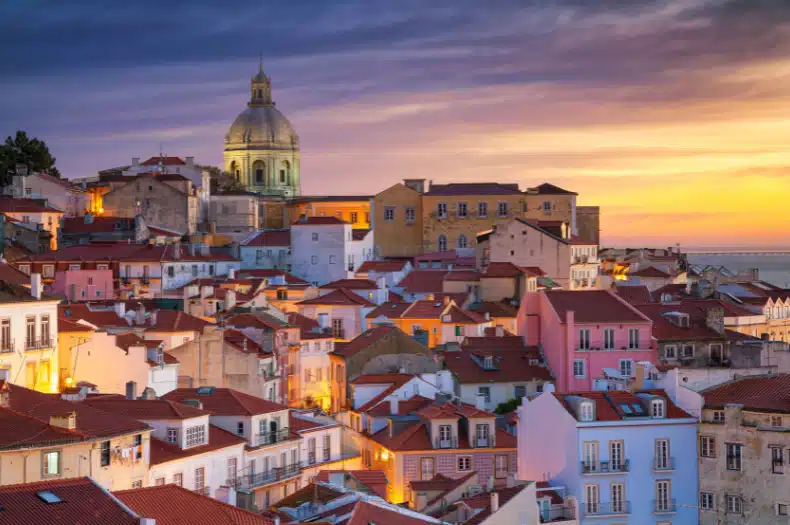
Kick off your Lisbon adventure in the historic heart of the city – the Alfama District.
Labyrinthine alleys, pastel-hued buildings, and the sound of Fado music drifting through the air; it’s the essence of Lisbon.
As you wander, make your way to the São Jorge Castle (Castelo de São Jorge). Perched atop a hill, it’s not just about the castle’s rich history but also the panoramic views of the city and the shimmering Tagus River.
Pro tip: It’s best to hit the castle early to avoid those long lines. And if you’re considering a guided tour, it’s a fantastic way to dive deep into the stories behind the stone walls.
Lunchtime: Savory Bites in Baixa District
After soaking up the history, head down to the Baixa District. This is your chance to indulge in some traditional Portuguese delicacies. Remember, you can’t leave Lisbon without trying a Pastel de Nata. These creamy custard tarts are pure bliss.
Afternoon: Elevador de Santa Justa, Rossio Square, and Avenida da Liberdade
Post-lunch, make your way to the Elevador de Santa Justa. This historic lift will give you some of the city’s best views without the uphill trek.
Once you’ve captured your moments, stroll to Rossio Square, a bustling hub filled with historic buildings and the hypnotic patterns of its wave-like mosaic pavements.
Continue your day with a leisurely walk along Avenida da Liberdade, Lisbon’s answer to the Champs-Élysées.
Flanked by leafy trees, high-end boutiques, and cozy cafes, it’s a great place to people-watch and enjoy the city’s pulse.
Evening: Bairro Alto District
As the sun dips, there’s no place like the Bairro Alto District. Renowned for its nightlife, start with a sumptuous dinner in one of its many local restaurants.
Post-dinner, wander around, and perhaps catch a live Fado show. It’s the soulful music of Portugal, and experiencing it live is something truly special.
Day 2: Monumental Discoveries and Cultural Gems
Morning: Belém District – Jerónimos Monastery and Belém Tower
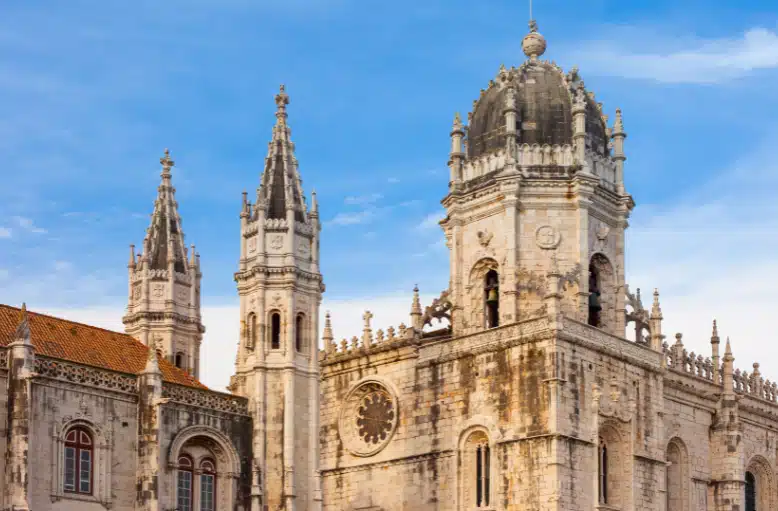
On your second day, venture out to the Belém District. Start your morning with the grandeur of Jerónimos Monastery, a UNESCO World Heritage site that epitomizes the Manueline style of architecture. Just a minute walk away is the iconic Belém Tower, standing guard at the mouth of the Tagus River.
Foodie Tip: Drop by Pastéis de Belém, the original home of the Pastel de Nata. Yes, it’s time for another one, but trust me, these are slightly different – and some say, the best!
Afternoon: LX Factory and Padrão dos Descobrimentos
Next stop, the LX Factory. Once an industrial complex, now a hive of cultural and artistic activity. Browse through boutique stores, art installations, and maybe grab a book at Livraria Bertrand, the world’s oldest operational bookstore.
Round off your afternoon at Padrão dos Descobrimentos. This monument celebrates Portugal’s Age of Exploration, and the views from its observation deck are just stellar.
Evening: Miradouro de Santa Luzia and Alfama Revisited
End your day with the sunset views from Miradouro de Santa Luzia. Overlooking the Alfama rooftops, the Tagus River, and with the soft hues of the setting sun, it’s pure magic.
If you feel up for it, take a second dive into Alfama, perhaps exploring spots you missed on your first day.
Lisbon’s Culinary Delights: A Feast for the Senses
Iconic Dishes – Flavorful Bites of Lisbon:
Lisbon’s culinary scene is an aromatic blend of traditional flavors and contemporary twists. At the forefront is the iconic Bacalhau.
It’s said there are 365 ways to prepare this versatile codfish, one for each day of the year.
From “Bacalhau à Brás” (shredded cod with finely chopped straw fries and scrambled eggs) to “Bacalhau com Natas” (cod with cream), it’s an integral part of the Portuguese culinary DNA.
Another must-try is the Bifana. This simple yet flavorful pork sandwich, marinated in garlic and spices, is often enjoyed with a squirt of spicy piri-piri sauce.
Dive into local taverns or tascas, and you might also stumble upon “Amêijoas à Bulhão Pato” (clams with garlic and coriander) or “Polvo à Lagareiro” (octopus with potatoes) – each bite promising a rich array of flavors.
Sweet Treats – Desserts Worth Every Calorie:
It’s impossible to talk about Lisbon’s desserts without giving a special nod to Pastéis de Nata (and I know we have already mentioned these a ton!).
However, these custard tarts, with their flaky pastry and creamy center, often dusted with cinnamon and powdered sugar, are nothing short of a dream. But Lisbon’s sweet repertoire doesn’t end here.
“Toucinho do Céu” is an almond cake rich with egg yolks and sugar, and “Arroz Doce” is a creamy rice pudding sprinkled with cinnamon, reminiscent of comforting family gatherings.
Local Beverages – Sips of Tradition:
For those looking to wash down these culinary wonders, Lisbon offers a delightful array of local beverages. Ginjinha is a must-try.
This cherry liqueur, often served as a shot with a cherry at the bottom, is a local favorite, especially in the older parts of town.
On the wine front, Vinho Verde stands out. This “young wine” from the Minho region in the north is refreshing with its slight fizz, making it perfect for a sunny Lisbon afternoon.
Discovering Lisbon is as much about its landmarks and cobblestone streets as it is about its culinary landscape. Each dish and drink tells a story, an echo of the city’s rich history and vibrant culture, waiting for you to take a bite or sip and dive right in.

Tips and Recommendations for a Seamless Lisbon Experience
Lisbon, with its captivating history, culinary delights, and scenic landscapes, is a city that beckons travelers.
But to truly maximize your experience in the Portuguese capital, a few insider tips can go a long way.
From avoiding the notorious long lines to effortlessly navigating the labyrinthine alleys, here’s your cheat sheet to conquering Lisbon:
1. Online Tickets – Your Best Friend:
Lisbon’s charm isn’t a well-kept secret, and its attractions can get crowded, especially during peak seasons.
If the Jerónimos Monastery, Belém Tower, or the Lisbon Cathedral are on your itinerary, do yourself a favor and book your tickets online.
Not only will this save you time (and ensure you actually get inside!), but it often grants access to fast-track lanes, so you can breeze past those daunting queues.
Many platforms even offer combined ticket deals, allowing you to get more bang for your buck.
2. Navigating the City:
Lisbon’s cityscape is a blend of steep hills, winding alleys, and expansive plazas. While wandering around aimlessly has its own charm, it’s easy to get turned around in the maze-like Bairro Alto or Alfama districts.
A physical map, or a reliable map app on your phone, can be a godsend. Pro-tip: Google Maps allows you to download maps for offline use, so you’re never truly lost, even without data.
3. The Golden Hour – Best Views Guaranteed:
There’s something magical about watching Lisbon as the sun sets, with the city bathed in a golden glow. Miradouro da Graça and Miradouro de Santa Luzia are among the best viewpoints in the city.
However, given their popularity, they tend to get crowded. Aim to get there just before sunset to snag a prime spot, camera in hand.
4. Public Transportation – Embrace the Charm:
The vintage trams of Lisbon, especially the famous number 28, are not just a means to get around but are attractions in themselves.
But remember, they get packed quickly! If you’re aiming for that perfect tram shot or just a comfortable seat, avoid rush hours.
Also, consider investing in a Lisboa Card. It not only offers unlimited use of public transport, including trams, buses, and the metro, but also grants you discounted, sometimes even free, access to top attractions.
5. Dress for the Journey:
Lisbon’s streets, especially in the older districts, are often paved with cobblestones. They’re beautiful but can be a challenge to navigate, especially in heels. Comfortable shoes, preferably with a grip, will be your best companion. Trust me, your feet will thank you later!
6. Indulge in the Culinary Scene, but Book Ahead:
Yes, the Pastéis de Nata are divine, but Lisbon has a smorgasbord of culinary delights to offer.
If there are popular or highly-rated restaurants you’ve set your heart on, make reservations. The best places tend to fill up quickly, especially during dinner hours.
7. Hydration and Sun Protection:
Under the Iberian sun, Lisbon can get quite warm, especially in the summer. Always carry a water bottle, and don’t forget to slap on some sunscreen.
Most of the tourist attractions are open-air, and you’d be surprised how much sun you can catch while lost in the beauty around you.
8. Dive into the Fado Experience:
Fado, the soulful music genre originating from Portugal, is an experience not to be missed. While many places in the Bairro Alto district offer Fado nights, it’s wise to check reviews or ask locals for recommendations to ensure an authentic experience.
9. Embrace the Local Time:
Lisbon operates on its own time, often referred to as “Lisbon Time.” Don’t be surprised if things move a tad slower than you’re used to. Restaurants might open a bit later, and shops might have erratic timings. It’s all part of the city’s laid-back charm.
10. Don’t Overpack Your Itinerary:
There’s a lot to see in Lisbon, but cramming everything into two days will leave you exhausted and overwhelmed. Prioritize what you genuinely want to explore and remember: Sometimes, the best moments come from the unplanned adventures.
Where to Stay in Lisbon: A Quick Guide
Choosing where to lay your head after a long day of exploring can sometimes be as daunting as deciding which attractions to visit.
The vibrant city of Lisbon offers a plethora of accommodations, from luxe boutique hotels to cozy B&Bs.
Let’s break it down by area and type so you can pick the spot that aligns best with your travel style and budget.
1. Baixa District – The Heart of the City:
Why Stay Here: This is Lisbon’s city center, bustling with life and energy. It’s close to many major tourist attractions, including Praça dos Restauradores and Rossio Square. If you love being in the middle of the action, this is the spot.
Top Pick: Consider a boutique hotel nestled amidst the grandeur of neoclassical buildings, offering both comfort and a touch of Portuguese elegance.
2. Alfama District – Old World Charm:
Why Stay Here: This is one of the oldest neighborhoods in Lisbon, radiating character and history with its narrow streets and traditional Fado houses. If you’re keen on a more authentic experience, Alfama is the place to be.
Top Pick: Opt for a renovated guesthouse that provides modern amenities while preserving the area’s old-world feel.
3. Bairro Alto District – Nightlife and Culture:
Why Stay Here: By day, it’s a picturesque area with historical sites; by night, it becomes a lively hub filled with bars, restaurants, and Fado music echoing through the streets. Ideal for those who love a mix of history and vibrant nightlife.
Top Pick: A trendy B&B with a rooftop terrace might be just what you need to enjoy both the daytime views and nighttime vibes.
4. Belém District – Riverside Serenity:
Why Stay Here: Slightly away from the city’s hustle and bustle, Belém boasts attractions like the Jerónimos Monastery and Belém Tower. The district sits by the Tagus River, giving it a serene and picturesque appeal.
Top Pick: Consider a riverfront hotel where you can enjoy panoramic views of the Tagus while savoring your morning coffee.
5. Avenida da Liberdade – Luxury and Shopping:
Why Stay Here: Known as Lisbon’s luxury boulevard, this area is lined with designer boutiques, theaters, and charming kiosks. If upscale shopping and opulence appeal to you, look no further.
Top Pick: Splurge a little and stay in one of the 5-star hotels that line the boulevard, offering top-notch services and a taste of luxury.
Budget Options:
Lisbon is known for its affordable accommodation options. For budget travelers, there are numerous hostels that offer clean rooms and a chance to meet fellow travelers. Alternatively, consider looking into apartment rentals if you prefer a home-away-from-home vibe.
Regardless of where you choose to stay, Lisbon’s efficient public transportation system ensures you’re never too far from the action.
Whether it’s a chic hotel, a cozy guesthouse, or a lively hostel, you’re bound to find something that suits your taste and budget in this beautiful city. Just remember to book in advance, especially during high season, to secure the best deals.

Day Trips from Lisbon: A Whirlwind of Adventure Awaits
Ah, Lisbon. As fantastic as it is, sometimes you might get that itch to venture a little further, to see what lies beyond the city’s picturesque hills and cobblestone streets.
Thankfully, Lisbon’s prime location in Portugal means there’s a treasure trove of destinations just a short journey away. Here’s a round-up of some must-see spots:
1. Sintra:
Why Go: About a 40-minute train ride from Lisbon, Sintra feels like stepping into a fairy tale. With its lush forests, exotic gardens, and a plethora of historic palaces, it’s easy to see why it’s a UNESCO World Heritage Site.
Highlight: The Pena Palace, a romanticist castle colored in vibrant yellows and reds, stands majestically above the town. And let’s not forget the mystical Quinta da Regaleira with its captivating gardens and underground tunnels.
Want to know more about Sintra? Check out my previous post here.
2. Cascais:
Why Go: A popular seaside town, Cascais offers a delightful blend of sandy beaches and a charming old town. It’s a perfect spot to bask in the sun and enjoy some fresh seafood.
Highlight: Wander around the town center, and don’t miss the Boca do Inferno, a dramatic cliff formation where you can witness the roaring Atlantic crashing into the rocks.
3. Óbidos:
Why Go: Encircled by medieval walls, Óbidos is a beautifully preserved historical town with narrow streets and white-washed houses adorned with bright flowers. It feels like a journey back to the Middle Ages.
Highlight: Sip on a traditional ‘Ginjinha’ (cherry liqueur) served in a chocolate cup as you stroll through the alleys. The annual Medieval Market is a fantastic experience if you time your visit right.
4. Setúbal and Arrábida Natural Park:
Why Go: For those nature enthusiasts, the region offers stunning landscapes, from serene beaches to rolling hills.
Highlight: Visit the breathtaking Praia da Figueirinha and, if you’re into seafood, Setúbal is renowned for its fresh catch, especially the cuttlefish.
5. Évora:
Why Go: A UNESCO World Heritage Site, Évora is a historical city boasting Roman ruins, a Gothic cathedral, and a macabre Chapel of Bones. It’s a great insight into Portugal’s rich history.
Highlight: The Roman Temple, also known as the Temple of Diana, is remarkably well-preserved and a testament to the city’s ancient significance.
While it’s tempting to soak in all that Lisbon has to offer, these day trips add an extra layer to your Portuguese adventure. Each destination provides a unique experience, from sun-kissed beaches to historic landmarks.
If you’ve got some extra time, make sure you venture out to at least one of these gems. Remember, they’re just a stone’s throw away!
Wrapping Up Your Lisbon Adventure
And just like that, we’ve dashed through two exhilarating days in Lisbon! It’s always surprising how much ground you can cover when your heart’s in it, and let’s be real—Lisbon makes it easy to fall head over heels.
From the historic alleys of the Alfama district to the modern vibes at LX Factory, this city effortlessly marries the past with the present.
We’ve basked in the majestic views from numerous miradouros, indulged in the flaky goodness of pastéis de nata, and felt the rhythm of the city through its iconic trams.
And beyond the sightseeing, we’ve delved a bit into the soul of Lisbon, tapping into its rich history, culture, and, of course, its delectable cuisine.
But perhaps the most special thing about Lisbon is its atmosphere—the warmth of its people, the golden sunsets over the Tagus River, and the melodies of Fado echoing through its streets. It’s a city that beckons you to return, to discover more hidden gems and make even more memories.
Here’s hoping this guide gives you a solid starting point for your own Lisbon story. The Portuguese capital awaits, so here’s to future adventures, sun-drenched days, and countless pastéis! Cheers!
Frequently Asked Questions (FAQs) About Lisbon
1. When is the best time to visit Lisbon?
The best time to visit the Portuguese capital is during spring (April to June) or fall (September to October). The weather is pleasant, and there are fewer tourists. However, if you’re looking to experience the city’s festivals, summer is vibrant but also more crowded.
2. Can I get by with just English?
Absolutely! While Portuguese is the official language, most of the locals, especially in the city center and touristy areas, speak English. However, it’s always appreciated if you throw in a “obrigado” (thank you) or “bom dia” (good morning)!
3. Are there any local etiquettes I should be aware of?
Portuguese people value politeness. A simple smile, thank you (“obrigado” for men and “obrigada” for women), and please (“por favor”) go a long way. When entering shops or eateries, it’s customary to greet with “bom dia” in the morning or “boa tarde” in the afternoon.
4. Is Lisbon a safe city for tourists?
Lisbon is generally safe for tourists. Like any major city, it’s essential to be aware of your surroundings, especially in crowded areas or at night. Pickpocketing can be a concern in tourist-heavy spots, so keep your belongings secure.
5. How do I avoid tourist traps?
While Lisbon has maintained its authenticity, like any popular destination, some spots cater more to tourists. To get a genuine experience, venture out to lesser-known neighborhoods, ask locals for recommendations, and try to avoid eateries right next to major tourist attractions.
6. What’s the deal with the cork products?
Portugal produces about half of the world’s cork. When in Lisbon, you’ll come across numerous shops selling cork-based products like bags, hats, and even postcards. They make for unique, sustainable souvenirs!
7. Can I drink tap water?
Yes, the tap water in Lisbon is safe to drink. Plus, by refilling your bottle, you’re being eco-friendly and saving some euros!
8. Are there any specific local events or festivals I should look out for?
June is a fantastic month in Lisbon due to the “Festas de Lisboa.” The city comes alive with street parties, music, and traditional grilled sardines. If you’re around during this time, it’s a must-experience!
Remember, every trip comes with its own set of unique experiences and challenges. Embrace the unexpected, seek out the local spots, and most importantly, savor every moment in this beautiful city.
Join the Lisbon Adventure!
If you’ve made it this far, it’s clear Lisbon is calling your name. Whether you’re drawn to its cobbled streets, sunlit miradouros, or simply a plate piled high with pastéis de nata, the city promises memories that’ll last a lifetime.
So, why wait? Dive into planning, book that ticket, and embark on your very own Lisbon story. And when you do, don’t forget to share your experiences and tips with us.
Together, we make travel richer, one adventure at a time. Let’s explore, learn, and inspire each other. Here’s to the next journey!





5 Comments